Spend a few afternoons in newly built apartments and you’ll notice a pattern: windows keep getting bigger. Floor-to-ceiling glass, four- and five-metre spans, and double-height living rooms. They look fantastic on handover day. What nobody mentions is that dressing a window like that usually means heavy fabric on a long track, and dragging 15 kilos of lined blackout curtain across a rail, twice a day, every day, gets old quickly.
That’s the real argument for a curtain motor. Not technology for its own sake, and not some luxury add-on reserved for hotel suites. It’s simply a better way to live with the windows you already have. Paired with well-chosen curtains for windows that actually suit the room, motorisation solves a daily friction most people have quietly put up with for years.
What Is a Curtain Motor, Exactly?
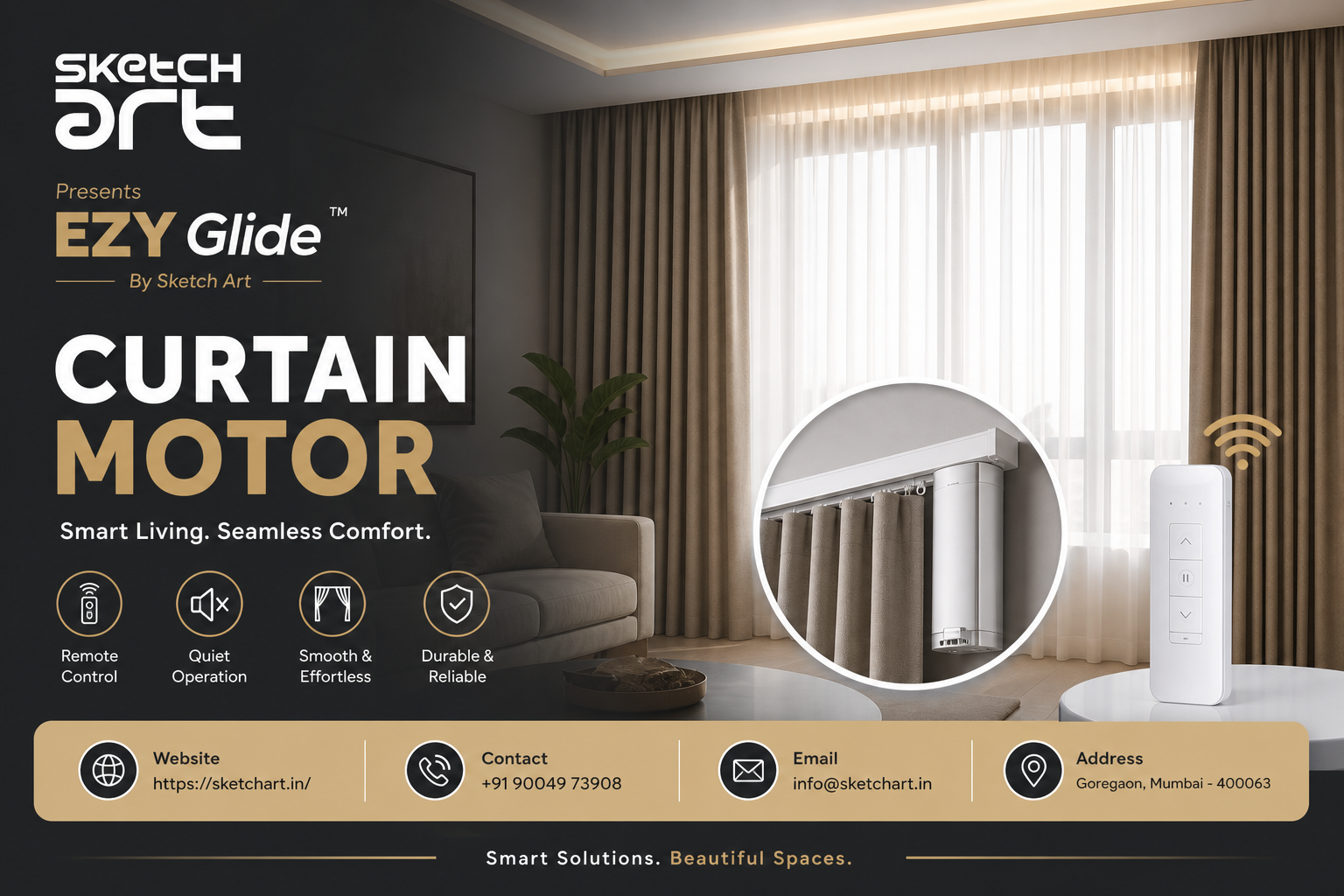
Strip away the marketing and it’s a straightforward piece of engineering: a compact electric drive unit, usually tucked at one end of the curtain track, that pulls a carrier belt or cord to move the fabric along the rail. The curtains glide open or closed; you don’t touch them.
How you trigger that movement depends on the system. Most setups offer a handheld remote as standard, and from there the options widen: a wall switch near the door, a smartphone app, or integration into a smart-home setup so the curtains respond to schedules or voice commands. Some of the better motors also include a touch-trigger feature: give the fabric a gentle pull and the motor takes over and completes the motion. It sounds like a small thing until the first time a guest does it instinctively and the curtain just… obliges.
One detail worth asking about before you buy is manual override. If the power cuts, can you still draw the curtains by hand without forcing the mechanism? On a decent motor, yes. On a cheap one, not always.
Why Homeowners Are Making the Switch
The reasons people give for motorising tend to be practical, not flashy.
Weight: Heavy curtains are the obvious one. Velvet, triple-lined blackout, and interlined drapes—these fabrics look and perform beautifully, but they’re genuinely awkward to move by hand, and the constant tugging wears pleats out of shape over time.
Scale: Wide windows and sliding glass doors need long tracks and a lot of fabric. A motor rated for the load moves the whole span evenly, in one motion, instead of the hand-over-hand shuffle most of us do.
Awkward placement: Windows behind sofas, above stairwells, high on double-height walls — every home seems to have at least one window you have to lean, stretch, or climb to reach. Motorisation removes that negotiation entirely.
Light on your schedule: There’s a genuine quality-of-life difference in having curtains that close themselves at dusk and open gradually in the morning. It sounds indulgent. People who have it describe it as obvious.
A tidier window: No cords hanging, no wand, no uneven bunching where the fabric was last grabbed. The curtain hangs the way it was dressed on installation day, which, incidentally, is also why cordless motorised tracks are the safer option in homes with young children or pets.
Choosing the Curtains Comes First
Here’s a mistake worth avoiding: picking the motor before you’ve settled on the curtains. The fabric determines almost everything about the hardware, so the sequence matters.
A few things to work through:
Measure properly, then add for stack-back. When curtains open, the gathered fabric has to sit somewhere. That stack typically eats 15–20% of the track length. If you don’t allow for it, your “open” curtains will permanently cover part of the glass — on a window you presumably wanted light from.
Know your fabric weight. Sheers might come in under 8 kg on a standard window. A full-width, floor-length blackout with lining can easily double or triple that. Get an actual number, because it dictates the motor’s torque rating — and always leave headroom above what you calculate.
Match the fabric to the room’s job. Bedrooms usually want true blackout (the good stuff blocks 90%+ of light). Living rooms often do better with sheers for daytime and a heavier drape for evening — a dual-track setup handles both independently. Home offices need glare control more than darkness.
Think about the heading style. If you’re motorising, ripple-fold (S-fold) curtains deserve a look. The continuous wave pleats glide along a powered track with very little resistance, stack back compactly, and fall identically every time with no manual rearranging after each use. Pinch pleats work too, but ripple fold behaves as though it were designed for motors, because functionally it was.
Decide the opening direction. Centre-opening, one-way draw, or a configuration matched to an unusual window layout—this affects both the track and where the motor sits.
Where Do Motorised Curtains Actually Make Sense?
Almost anywhere, honestly, but they earn their keep fastest in certain spots. Living rooms with large glazed openings. Master bedrooms, especially on a morning schedule. Home theatres, for obvious reasons. Any window you interact with multiple times a day.
Beyond homes, the same logic applies to offices, hotel rooms, meeting spaces, restaurants, and showrooms, anywhere staff would otherwise spend time walking room to room adjusting coverings or where consistent presentation matters.
That said, plenty of windows don’t need a motor at all, and it’s worth saying so plainly: a small, lightweight curtain that rarely gets moved is fine on a manual track. Motorisation pays off as size, weight, frequency of use, or awkwardness of access increases.
What to Check Before You Commit
A few practical questions will save you from the most common installation regrets:
1. What’s the real load?
Curtain weight plus track length determines the motor rating. Guess low here, and you’ll hear the strain within months.
2. Where’s the power?
Battery motors retrofit cleanly with no wiring and need recharging only a few times a year. Hardwired motors are stronger and maintenance-free, but they want a concealed power point—easiest to plan during a renovation, painful to add after painting.
3. How do you want to control it?
A simple remote is enough for a guest room. A bedroom you’ll live in daily probably justifies app control and scheduling. Decide before purchase, because retrofitting smart capability isn’t always clean.
4. What’s it mounting to?
Track, motor, and fabric add up. The ceiling or wall needs to carry the combined load, and the track needs to sit dead level, even a couple of millimetres of tilt shows up as uneven travel.
5. Is the track up to the job?
A quality motor on a flimsy track still rattles. The track is the foundation of the whole system, and it’s the part people most often cheap out on.
This is also where professional measurement earns its fee. Most motorised-curtain complaints — jerky movement, a motor straining, curtains that don’t quite meet in the middle — trace back to measurement or specification errors made before anything was installed.
EZY Glide: Motorised Window Solutions
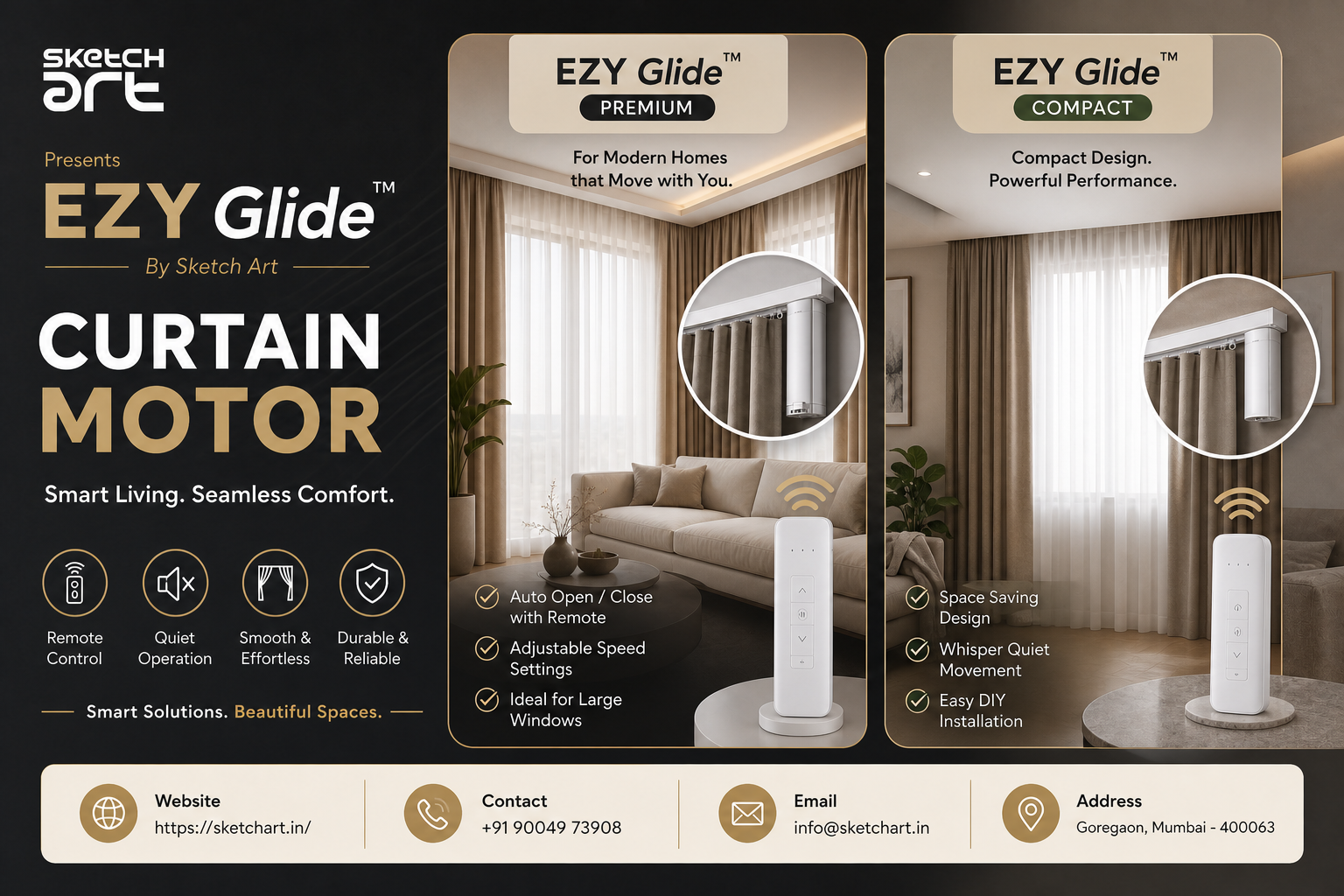
EZY Glide, the window solution brand owned by Sketch Art, brings solutions. Sketch Art brings the design background fabric selection, styling, and understanding of how a window treatment actually sits within an interior, while EZY Glide handles the engineering: motor selection, track configuration, and integration with whatever smart setup you already run.
That combination matters more than it might seem. A motorised curtain really involves four decisions — fabric, track, motor, and control that have to be made together. Get one wrong and the other three can’t compensate. Getting them specified as a single system, rather than assembled from separate purchases, is usually the difference between a setup that’s still running quietly in year eight and one that’s being replaced in year three.
So, Is It Worth It?
For the right windows, yes, and the “right windows” test is simple. If the curtains are heavy, the span is wide, the window is hard to reach, or you’re opening and closing them every single day, a curtain motor stops being a gadget and starts being the sensible option. If none of those apply, save the money.
The one warning worth repeating: choose the system around the window, not the other way around. Specifications on a product page tell you what a motor can do. Your window, your fabric, and your room tell you what it should do. Those are different conversations, and the second one is where a good supplier spends their time.