Choosing the right Wallpaper for Walls can completely transform the appearance of a room. From subtle textures and elegant patterns to bold statement designs, wallpaper offers more creative possibilities than paint alone. However, once you have selected a design, another important decision remains: Should you choose peel-and-stick wallpaper or traditional wallpaper?
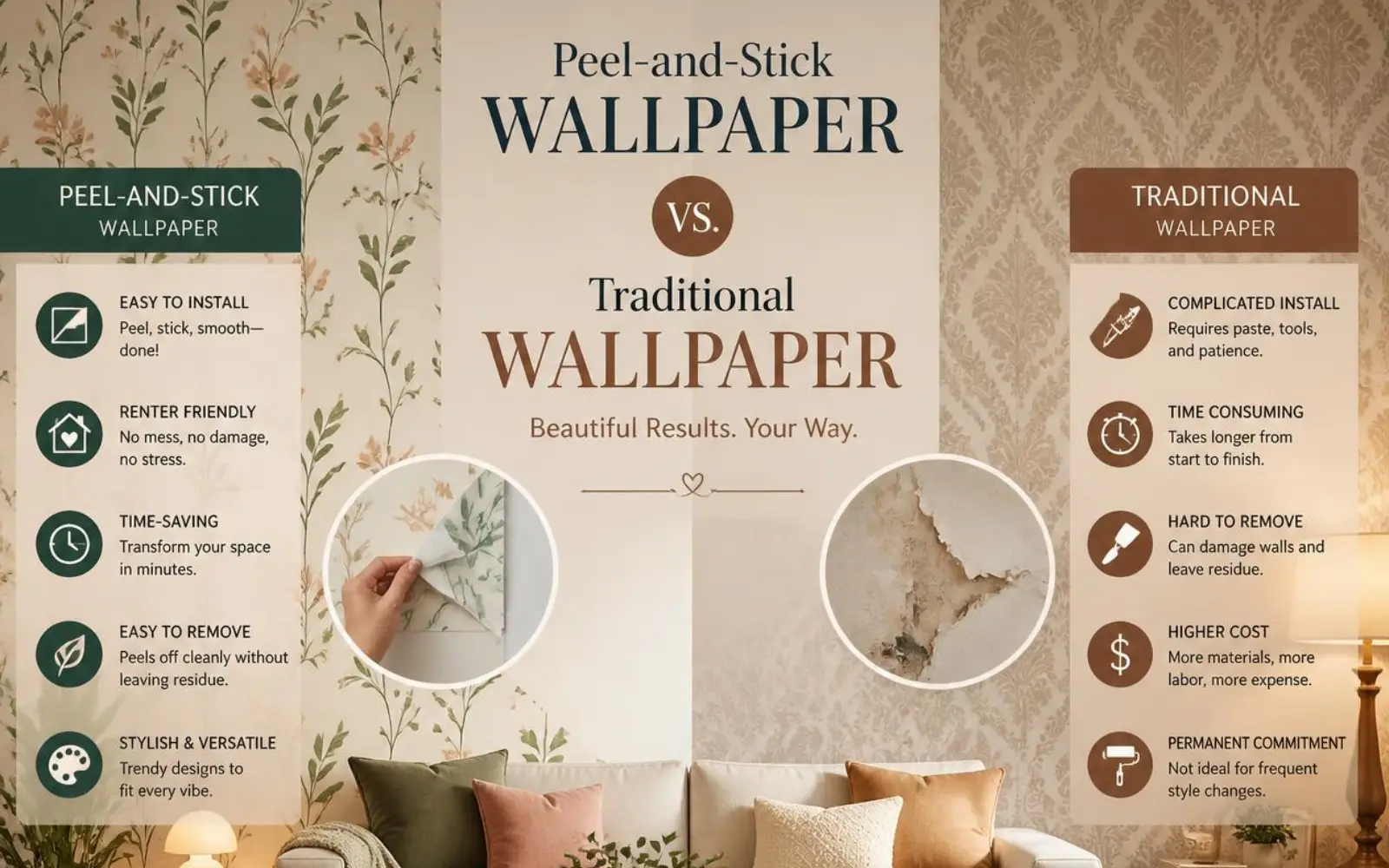
Both options can create an attractive, finished look, but they differ significantly in installation, maintenance, durability, flexibility, and removal. Peel-and-stick wallpaper uses a self-adhesive backing, while traditional wallpaper generally requires paste or another adhesive during installation.
If you are planning to upgrade your bedroom, living room, office, hallway, or feature wall, understanding these differences can help you select the right Wallpaper for Walls for your requirements.
What Is Peel-and-Stick Wallpaper for Walls?
Peel-and-stick wallpaper is a self-adhesive wall covering with an adhesive layer already applied to its back. A protective liner covers the adhesive until installation.
The basic installation process involves:
- Preparing and cleaning the wall
- Measuring and positioning the wallpaper
- Removing part of the protective backing
- Applying the wallpaper gradually
- Smoothing the surface to remove air bubbles
- Aligning subsequent panels or sheets
One of its biggest attractions is convenience. There is no need to separately prepare wallpaper paste, making it particularly appealing for DIY projects and temporary room makeovers.
What Is Traditional Wallpaper for Walls?
Traditional wallpaper is installed using a separate adhesive or paste, depending on the specific wallpaper type. Some varieties are pre-pasted, while others require sticky stuff to be applied during installation.
Traditional Wallpaper for Walls can offer a broad range of:
- Patterns
- Textures
- Finishes
- Embossed designs
- Decorative effects
- Premium wallcovering materials
It is generally better suited to long-term projects where homeowners want a durable and professionally finished wall treatment.
Peel-and-Stick vs. Traditional Wallpaper for Walls: Quick Comparison
| Feature | Peel-and-Stick Wallpaper | Traditional Wallpaper |
| Installation | Relatively easy DIY installation | Requires more preparation |
| Adhesive | Adhesive already attached | Separate paste/adhesive generally required |
| Mess | Minimal | More preparation and cleanup |
| Repositioning | Often possible during installation | More difficult once adhesive is applied |
| Removal | Generally easier | Usually more time-consuming |
| Durability | Depends heavily on product and wall conditions | Generally suited to longer-term use |
| Design options | Wide and continually expanding | Very extensive |
| Best for | Accent walls, rentals and quick updates | Long-term residential and commercial applications |
| Skill requirement | Beginner-friendly | Moderate to professional |
| Wall preparation | Very important | Very important |
Pros of Peel-and-Stick Wallpaper for Walls
1. Easy Installation
The biggest advantage of peel-and-stick wallpaper is its straightforward installation process. Since adhesive is already incorporated into the product, homeowners can avoid handling separate wallpaper paste.
This makes it attractive for:
- DIY enthusiasts
- First-time wallpaper users
- Quick room makeovers
- Accent walls
- Temporary interiors
However, “easy to install” does not mean that wall preparation can be skipped. The surface should generally be clean, smooth, dry, and suitable for the manufacturer’s adhesive. Poor preparation can contribute to bubbles, lifting edges, or adhesion problems.
2. Convenient for Temporary Makeovers
If you enjoy changing your interior style regularly, peel-and-stick wallpaper for walls provides greater flexibility.
It can be particularly useful for renters, children’s rooms, home offices, or feature walls where you may want to change the appearance later.
3. Less Installation Mess
Traditional wallpaper installation can involve paste, brushes, rollers, water, and additional preparation. Peel-and-stick wallpaper eliminates the need for separately applying wallpaper paste, making the installation process cleaner.
4. Easier Removal
Removability is one of the main reasons consumers choose peel-and-stick wallpaper. Properly installed products can generally be removed more easily than many traditional wallpaper installations.
However, results can depend on the wallpaper, adhesive, paint condition, wall preparation, and removal technique. It is always advisable to test a small area before committing to an entire wall.
Cons of Peel-and-Stick Wallpaper for Walls
1. Wall Surface Matters
Peel-and-stick wallpaper for walls generally performs best on smooth, clean surfaces. Textured walls can make it harder for the adhesive to maintain consistent contact with the surface.
Before installation, repair cracks, holes, loose paint, and significant surface imperfections.
2. Adhesion Can Be Affected by Humidity
Humidity and environmental conditions can influence adhesive performance. For areas exposed to considerable moisture, always check the manufacturer’s recommendations before installation.
Bathrooms, kitchens, laundry areas, and poorly ventilated rooms require particular attention.
3. Long-Term Durability Varies
The lifespan of peel-and-stick wallpaper for walls varies considerably depending on the product, wall preparation, room conditions, and installation quality. It should not automatically be assumed that every peel-and-stick product will provide the same longevity as a high-quality traditional wallcovering.
Pros of Traditional Wallpaper for Walls
1. Excellent Long-Term Option
For homeowners looking for a long-term interior finish, traditional wallpaper can be a strong choice. Proper installation and suitable wall preparation can provide a durable decorative surface.
2. Extensive Design Choices
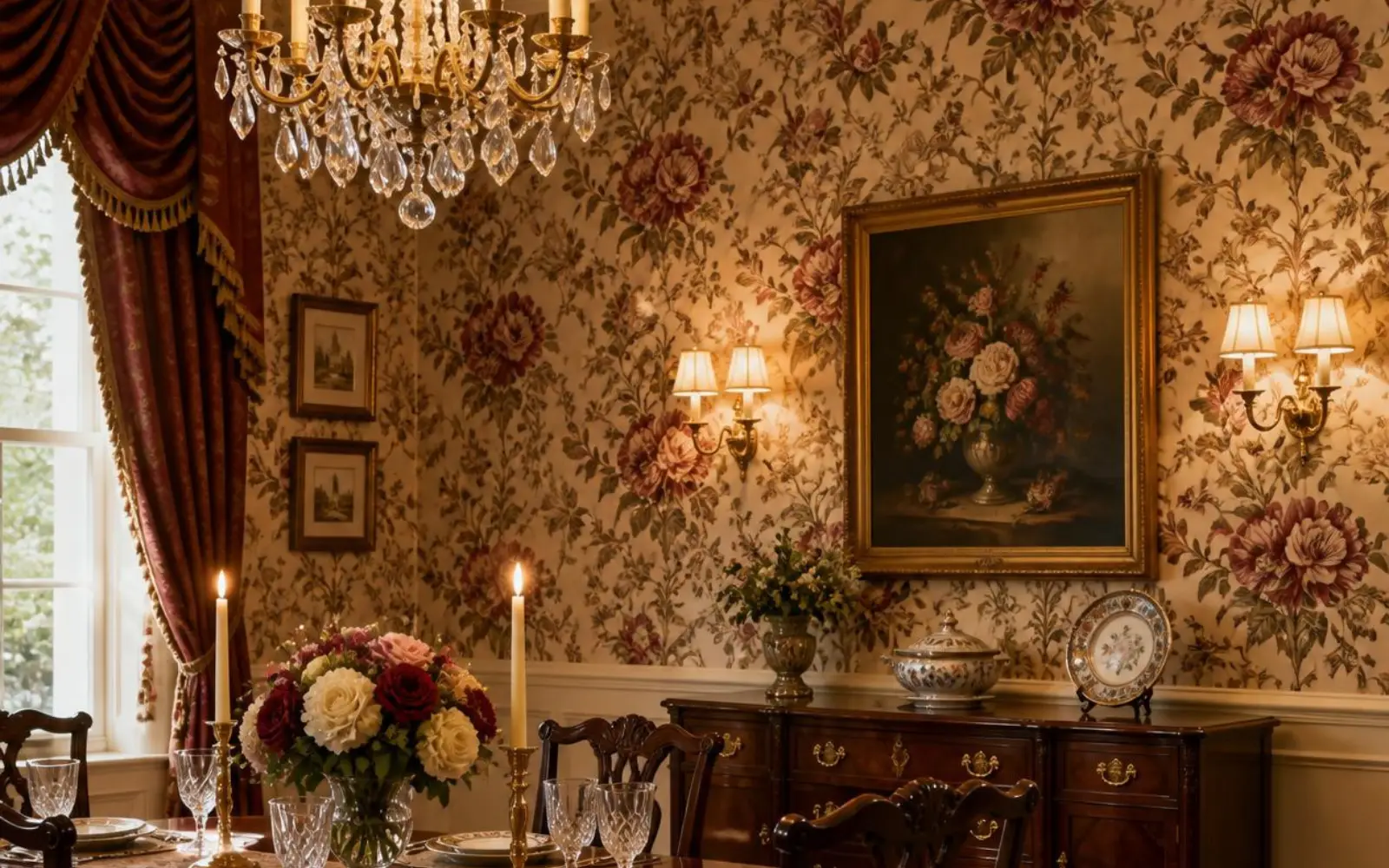
Traditional wallpaper has a particularly broad range of patterns, textures, materials, and finishes. If you want a highly specific decorative effect, traditional wallpaper may provide more options.
3. Suitable for Large Projects
Traditional wallpaper can be a practical choice when covering several rooms or creating a more permanent interior design scheme.
For large projects, professional installation can also help achieve accurate pattern alignment and a clean finish.
Cons of Traditional Wallpaper for Walls
1. More Complicated Installation
Traditional wallpaper generally involves more steps and tools than peel-and-stick Wallpaper for Walls. Depending on the material, installation may require adhesive, smoothing tools, cutting tools, and careful pattern alignment.
2. Removal Can Require More Work
Traditional wallpaper is designed for more permanent installation, so removing it can require more time and effort. The difficulty depends on the wallpaper type, adhesive, wall preparation, and installation method.
3. Professional Installation May Be Preferred
While experienced DIY users can install traditional wallpaper, professional installation can be worthwhile for large rooms, intricate patterns, expensive wallpaper, or difficult walls.
Which Wallpaper for Walls Is Better for Your Home?
There is no universal winner. The best choice depends on your room, budget, wall condition, desired lifespan, and willingness to handle installation.
Choose Peel-and-Stick Wallpaper If:
- You want a relatively simple DIY installation
- You are decorating a feature wall
- You expect to change your décor later
- You are renting and need flexibility
- You want minimal installation mess
- You have a smooth, properly prepared wall
Choose Traditional Wallpaper If:
- You want a long-term wall finish
- You prefer premium or specialised textures
- You are covering several rooms
- You want extensive pattern and material choices
- You are comfortable with professional installation
- Your project requires a more permanent decorative solution
How to Choose the Right Wallpaper for Walls
Before purchasing, consider these factors:
- Wall condition: Smooth, clean surfaces are important for successful wallpaper installation.
- Room environment: Consider humidity, ventilation, sunlight, and everyday use.
- Installation method: Decide whether you prefer a DIY-friendly system or professional installation.
- Design: Think about colours, patterns, textures, furniture, flooring, and lighting.
- Maintenance: Check the manufacturer’s cleaning and care recommendations.
- Long-term plans: If you frequently redesign your interiors, removable wallpaper may offer greater flexibility. If you want a lasting finish, traditional wallpaper may be more appropriate.
Final Verdict: Peel-and-Stick or Traditional Wallpaper for Walls?
Both peel-and-stick and traditional wallpaper for walls can be excellent choices when matched to the right application.
Peel-and-stick wallpaper stands out for convenience, flexibility, DIY installation, and easier removal. It can be an excellent solution for accent walls and temporary or frequently changing interiors.
Traditional wallpaper is better suited to customers prioritising a long-term finish, extensive design possibilities, and professional-quality installation.
Ultimately, the best Wallpaper for Walls is not simply the one with the easiest installation. It is the option that matches your wall condition, room environment, design requirements, budget, and expected lifespan.
Before installation, always follow the wallpaper manufacturer’s recommendations for wall preparation, adhesive compatibility, application, cleaning, and removal. This can make a significant difference to the final appearance and performance of your wallpaper.