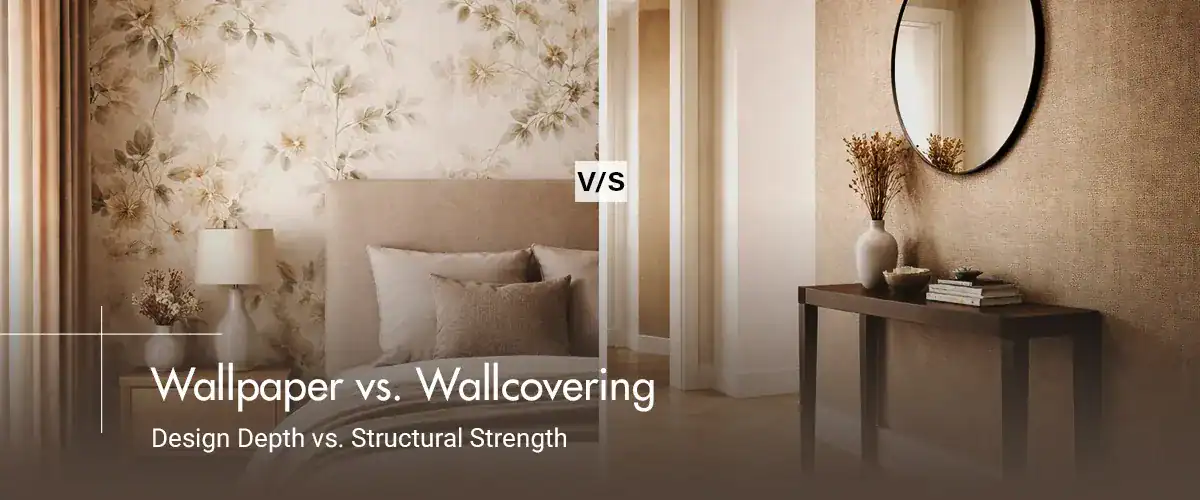
Walls are like the silent boundaries of our lives; they do more than just decorate the surface. Choosing between wallpaper and wallcovering requires a delicate balance between visual poetry and structural endurance. Whether you seek the intricate detail of an artistic print or the protective strength of an engineered textile, your selection should ideally align with your space. Understanding these minute differences helps you create a space that feels effortless. This guide is curated to help you align your interior vision with the functional demands of your space.
A] Structural Integrity and Surface Experience
The feeling of a space is often dictated by its underlying composition. While they may appear similar from a distance, the construction of these materials determines how they interact with their surroundings.
- Wallpaper: Layered and Design-Led
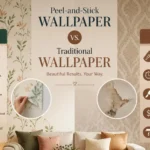
Modern wallpapers for walls today typically feature high-definition patterns and intricate colour palettes. This focus on aesthetic refinement and surface texture creates a soft, artistic finish that absorbs light beautifully. Such layers are best suited for quiet environments, like a bedroom or a private study, where a sense of tactile intimacy is paramount. Explore our wallpapers that are designed to feel intentional yet effortless. - Wallcovering: Structure and Performance
A wallcovering is a beautifully engineered surface designed for resilience. These compositions often incorporate refined vinyl, polyolefin, or natural textiles to create a protective layer. It is an intentional choice for spaces that demand both high performance and a composed, architectural finish. These surfaces are perfect for commercial spaces or active residential corridors where resilience becomes a necessity. Explore our curated wall coverings, designed to bring a quiet strength and structural harmony to your space.
B] Textures and Spatial Elegance
Today, different types of wallpapers are available that cater to specific sensory goals. Selecting the right material ensures the design looks refined for your space.
Non-woven wallpapers are crafted from a breathable blend of natural and synthetic fibres. It balances performance with design, providing a stable surface that is easy to install. For those who seek visual softness, paper wallpapers utilise a high-quality paper base printed with decorative patterns.
With fabric wallpapers, you get natural or synthetic fibres laminated to a paper backing, which are suitable for spaces that are sensitive to high-moisture environments. Textured wallpapers use natural elements such as jute, hemp, or seagrass, which can make a wall feel alive.
C] Quiet Strength and Performance-Led Surfaces
In areas of your house that experience more activity and movement, the walls require a different level of fortification. Wallcoverings are selected for their capacity to maintain a flawless surface, ensuring the space remains composed despite the demands of daily life.
Natural wall coverings are easily recognisable due to their organic texture and visible irregularity. These often incorporate materials such as cork, recycled wood veneer, or woven cellulose. Acoustic wallcoverings can absorb sound waves and reduce echoes, providing a clean aesthetic. These are often required in spaces such as home theatres, conference rooms, or open-plan offices.
Vinyl wallcoverings are recognised for their inherent strength and effortless upkeep. Most of these feature a PVC surface laminated to a fabric or paper backing. As they are naturally resistant to moisture, these wallcoverings provide a composed, durable finish in spaces where life is most active. In areas such as kitchens, bathrooms, or corridors, they offer a seamless balance between architectural beauty and the necessity of high performance.
D] Everyday Ease And Long-Term Care
Some surfaces are intended to be handled with care, while others act as a durable barrier against the world. Wallpapers allow spaces to feel calm and undisturbed while still maintaining a refined finish. Traditional wallpapers can easily absorb moisture and require light, controlled upkeep measures. Maintenance here usually involves dusting with a microfibre cloth or vacuum brush.
The non-porous surface of wallcoverings acts as a protective barrier, preventing stains from penetrating the material. This resilience is particularly valuable in Indian homes for kitchens, dining rooms, and corridors, as they are built to withstand rigorous cleaning methods.
E] Balancing Investment with Longevity
When deciding between wallpaper vs. wall covering, factors such as their material composition and lifecycle performance play a key role.
Wallpapers often provide a more accessible entry point for those looking to introduce pattern and colour to a space. The manufacturing and shipping costs are typically lower, except in the case of statement murals, and they are generally considered a great way to refresh a space to provide immediate visual impact.
Wallcoverings tend to have a higher initial investment when compared with wallpapers, especially when considering vinyl and commercial-grade options. But as they’re built to provide long term value, your home maintains its refined character for years to come, moving beyond the cycle of frequent intervention.
F] Choosing With Intent: A Spatial Approach
In sanctuaries like bedrooms and living rooms, wallpapers often become the ideal choice. Your walls need to be viewed as integrated surfaces rather than mere decorative finishes. Subtle textures, expressive patterns, and matte finishes are some excellent options to go for. Wallcoverings are built for areas that support repeated use, such as offices, corridors, hospitality spaces and other residential spaces. Materials like vinyl offer an enduring stability, maintaining an immaculate appearance through years of movement. Meanwhile, acoustic and textured finishes provide a sensory depth that integrates seamlessly into the architectural intent of the space.
Conclusion
Ultimately, each surface should shape the way a room is experienced in your home. Your decision between wallpaper vs. wall covering should be based on how they support your space over time. Understanding the unique language of these materials, from the soft intimacy of paper to the structural resilience of vinyl, is the first step toward a cohesive interior. At Sketch Art, we believe in choosing intentionally, supported by a commitment to beautifully engineered craftsmanship. Contact us if you’re looking for bespoke concepts, curated collections and end-to-end accountability for your wall surfaces. Together, we can refine the surfaces that define your home.