
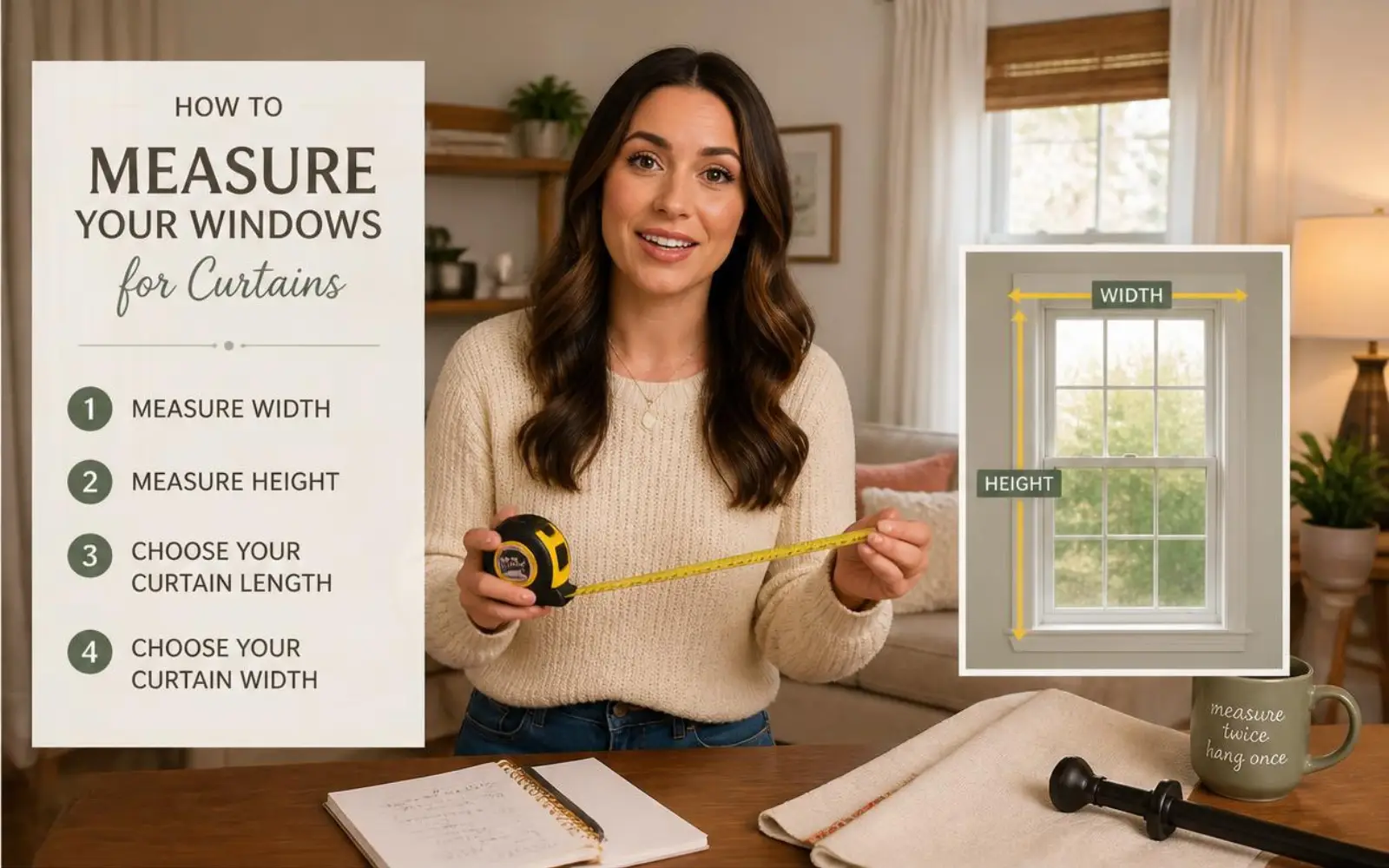
Choosing the perfect Windows For Curtains starts with one essential step measuring your windows correctly. Even the most beautiful curtains can look uneven or fail to provide adequate privacy if the measurements are inaccurate. Whether you’re decorating a new home or replacing old window coverings, taking accurate measurements ensures your curtains fit beautifully and function as intended.
In this guide, we’ll walk you through everything you need to know about measuring Windows For Curtains, from selecting the right curtain rod placement to calculating the ideal curtain width and length.
At Ezyglide, we believe that great window styling begins with precision. This guide walks you through exactly how to measure windows for curtains, so you can order with confidence and achieve a professional look every time.
Why Accurate Measurements Matter for Windows Curtains
Before proceeding with the steps, it is important to understand why measuring matters so much:
- Proper drape and fullness: Curtains that are too narrow look skimpy and thin when closed.
- Correct light control and privacy: Panels that are too short leave gaps that let in light.
- A polished, custom look: Well-measured windows for curtains create the illusion of height and space.
- Reduced returns and re-orders: Getting it right the first time saves time and money.
Tools You’ll Need
| Tool | Purpose |
| Steel measuring tape | More accurate than fabric tape for wall measurements |
| Step ladder | To reach curtain rod height safely |
| Pencil and notepad | To record measurements as you go |
| Existing curtain rod (or planned rod) | Needed to measure width and drop accurately |
| A second person (optional) | Helps hold the tape steady for large windows |
Step 1: Decide on Your Curtain Rod Placement First
Before measuring curtains, install or plan the position of your curtain rod, since all curtain measurements are taken from the rod, not the window frame itself.
General rule of thumb:
- Mount the rod 10–15 cm (4–6 inches) above the window frame to make the window appear taller.
- Extend the rod 15–20 cm (6–8 inches) beyond each side of the window frame so curtains can be pulled fully open without blocking light.
Step 2: Measure the Width for Curtains
- Measure the total length of the curtain rod, from end to end (not just the bracket-to-bracket span, but the full rod including finials).
- For a full, luxurious look, multiply the rod width by 1.5 to 2 times – this is the total fabric width you’ll need across both panels combined.
- Divide that number by two if you’re ordering a pair of curtain panels.
Example:
- Rod width: 150 cm
- Desired fullness (2x): 300 cm total fabric width
- Per panel (2 panels): 150 cm each
Step 3: Measure the Length (Drop) for Curtains For Windows
The “drop” is the vertical measurement from the top of the rod (or rings) to wherever you want the curtain to end. This is where most measuring mistakes happen.
Choosing Your Curtain Length Style
| Style | Where It Ends | Best For |
| Sill length | Just at or above the windowsill | Kitchens, bathrooms, casual spaces |
| Apron length | 10–15 cm below the sill | Rooms with radiators or furniture below |
| Floor length | 1–2 cm above the floor | Living rooms, bedrooms — clean, modern look |
| Puddle length | 5–15 cm of fabric pooling on the floor | Formal, dramatic interiors |
How to measure:
- Hook the tape measure at the top of the rod (or where the curtain ring sits).
- Pull it straight down to your chosen finishing point (sill, floor, etc.).
- Record this number as your finished curtain length – this is the length you’ll order or sew to.
Step 4: Account for Header Style
Different curtain headers (the top finishing of the curtain) affect how much fabric sits above the hanging point, which slightly changes your visible drop.
- Rod pocket: Fabric sits directly on the rod, minimal added height.
- Grommet/eyelet: Adds a small gap above the rod line.
- Pleated headers (pinch pleat, tab top): Curtain hangs just below the rings, adding a few centimetres.
If you’re using rings or hooks, always measure from the ring itself, not the rod, for the most accurate drop.
Step 5: Double-Check Before You Order
A simple final checklist prevents costly mistakes:
- Measured width includes the full rod length, not just the window frame
- Fullness multiplier (1.5x–2x) applied to width
- Length measured from the actual hanging point (ring or rod)
- Correct style chosen (sill, floor, or puddle)
- Measurements taken with the rod already installed at final height
- All numbers recorded in both cm and inches, if ordering internationally
Common Measuring Mistakes to Avoid
- Measuring only the window frame instead of the rod width.
- Skipping the fullness multiplier, resulting in flat, skimpy-looking panels.
- Using a cloth tape measure, which can stretch and cause inaccuracies.
- Forgetting to account for flooring changes, such as new carpet or tile being installed after measuring.
Final Thoughts
Measuring windows for curtains doesn’t need to be complicated – it simply requires the right order of steps: rod placement first, width second, and length last. With accurate measurements, your windows for curtains will hang beautifully, control light effectively, and elevate the overall look of your room.
At Ezyglide, we’re here to help you find curtains that fit both your windows and your style perfectly. If you’re ready to explore our collection, our range of made-to-measure windows for curtains designed for every room and every budget.