
Buying curtains for windows seems simple on the surface: pick a colour, order a size, hang them up. But curtains do far more than decorate a room. They control light, regulate temperature, provide privacy, and set the tone for your entire interior. Choosing the wrong ones can mean constant frustration. Curtains that fade too quickly, let in too much light, or don’t suit how you actually live.
At Ezy Glide, we’ve helped countless homeowners choose window treatments that look great and function even better. Before you buy your next set of curtains for your windows, consider these 10 essential factors.
Curtains do far more than decorate a window. A well-chosen curtain for windows can:
● Regulate natural light and reduce glare
● Improve insulation and lower energy bills
● Add privacy without blocking airflow
● Tie together a room’s colour scheme and style
● Protect furniture and flooring from UV fading
Getting these benefits depends entirely on choosing the right combination of fabric, fit, and function, which is exactly what this guide covers.
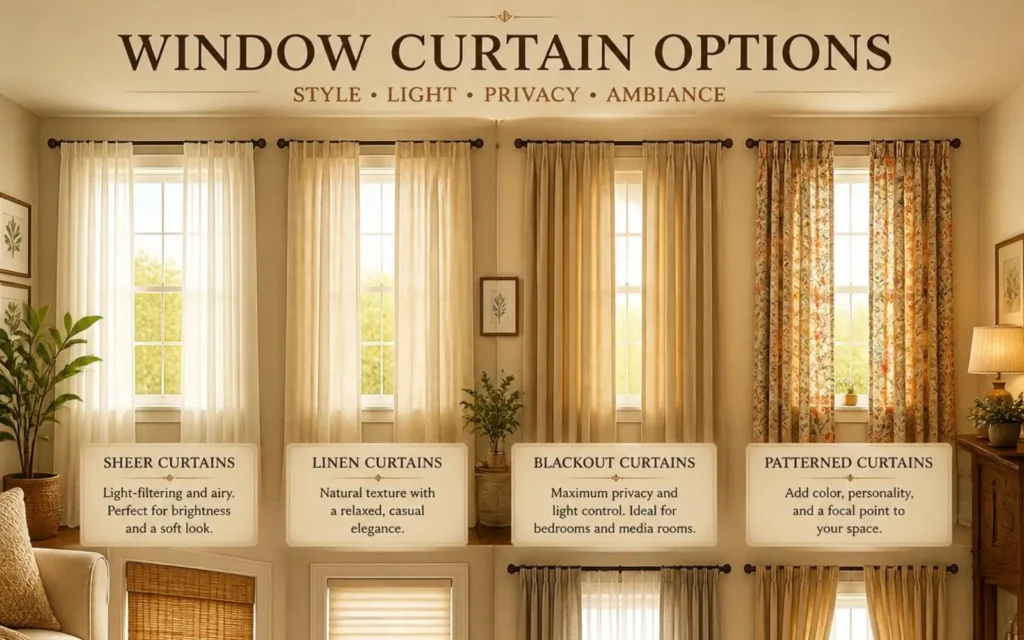
The fabric you choose determines how your curtains look, feel, and perform.
| Fabric | Best For | Light Control |
| Cotton | Casual, breathable spaces | Light to medium filtering |
| Linen | Relaxed, textured aesthetic | Light filtering |
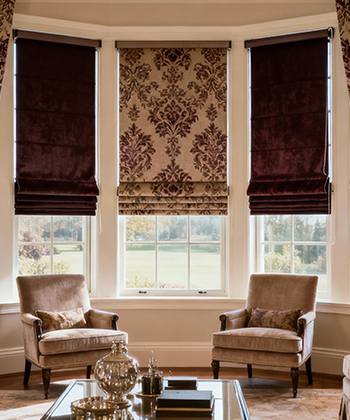
| Velvet | Formal rooms, insulation | Excellent blackout potential |
| Polyester blends | Budget-friendly, durable | Varies by weave |
| Sheer fabrics | Layering, soft light diffusion | Minimal privacy/light control |
Heavier fabrics like velvet offer better insulation and light-blocking, while lighter fabrics like linen and cotton suit warmer climates or rooms where airflow and natural light matter more.
Before buying, think about how each room is used:
● Bedrooms: Often benefit from blackout or heavily lined curtains for better sleep.
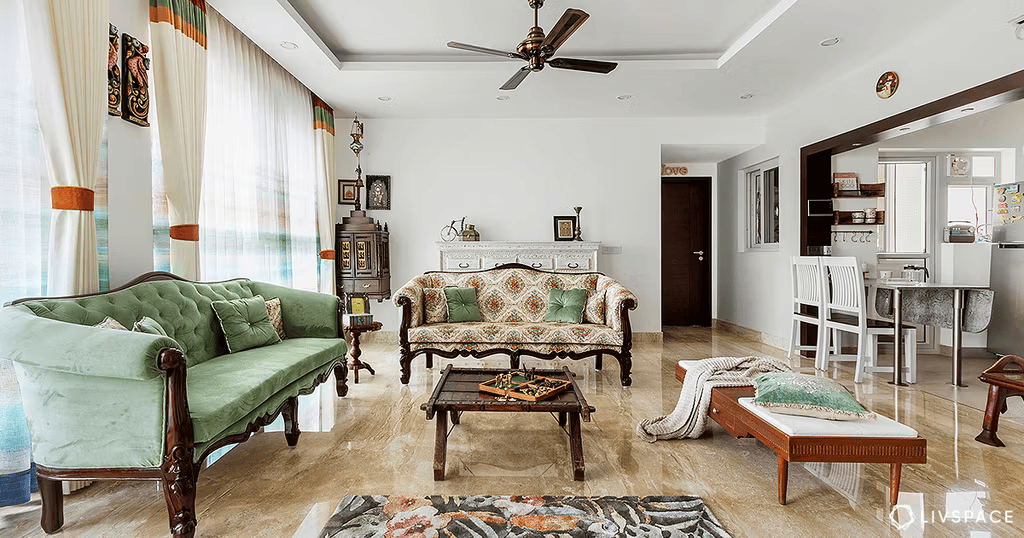
● Living rooms: Medium-weight fabrics that filter light while maintaining privacy in the evening.
● Kitchens and bathrooms: Lighter fabrics that allow natural light while offering modest privacy.
Layering sheer curtains with heavier drapes is a popular solution when a room needs flexible light control throughout the day.
The finished length dramatically changes how a room feels.
● Sill length: Practical, casual, good for kitchens and bathrooms.
● Apron length: Ends just below the sill, ideal near radiators or furniture.
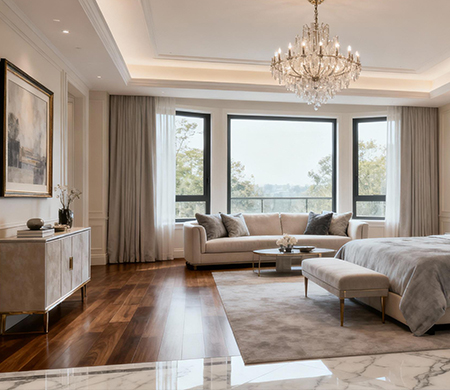
● Floor length: Clean and modern, suited to living rooms and bedrooms.
● Puddle length: Adds a formal, dramatic touch to statement rooms.
As a general rule, floor-length curtains that just skim or slightly clear the floor create the most polished, elongated look.
Even the most beautiful curtain for windows will look wrong if they don’t fit properly. Before purchasing:
● Measure the width of your curtain rod (not just the window frame)
● Multiply by 1.5–2x for proper fullness
● Measure the drop from the rod or ring to your desired finishing point
● Account for header style (rod pocket, eyelet, pleated) when calculating final drop
Getting these measurements right the first time avoids costly returns and reordering.
Curtains play a major role in a room’s overall colour palette. When choosing colour and pattern:
● Neutral tones (white, beige, grey) offer flexibility and timeless appeal
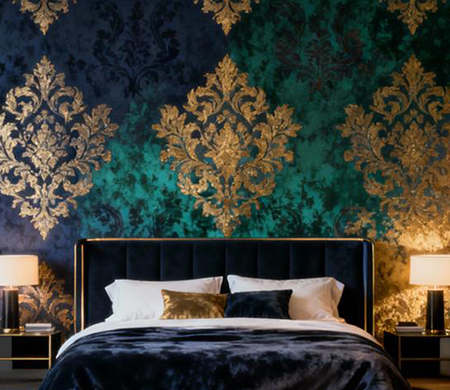
● Bold colours or patterns can act as a statement piece but should complement existing decor
● Consider how the fabric colour will look with both natural daylight and artificial lighting at night
Curtain lining adds functional and aesthetic value that’s easy to overlook.
| Lining Type | Purpose |
| Blackout lining | Blocks nearly all external light |
| Thermal lining | Improves insulation, reduces energy costs |
| Standard lining | Adds body, protects fabric from sun damage |
| Interlining | Adds extra warmth and a luxurious drape |
Lined curtains also tend to last longer, as the lining absorbs much of the sun exposure that would otherwise fade the outer fabric.
Different fabrics come with different care demands:
● Machine washable: Cotton, polyester blends are practical for busy households.
● Dry clean only: Velvet, silk are better for formal spaces with less frequent washing.
● Dust-prone fabrics: Heavier textures may require more regular vacuuming or airing.
Choosing a fabric that matches your realistic cleaning routine will keep your curtains looking fresh for longer.
Curtains for windows range in price depending on fabric, size, and customisation. When budgeting, consider:
● Cost per panel vs. total cost for all windows in a room
● Whether ready-made curtains meet your needs or custom sizing is required
● Long-term value: higher-quality fabrics often last significantly longer
It’s often more cost-effective to invest in slightly higher-quality curtains than to replace cheaper ones every year or two.
One increasingly popular consideration is whether to upgrade to motorised curtains. A curtain motor allows you to open and close your curtains via remote, app, or voice assistant without any manual pulling.
● Added convenience for hard-to-reach or heavy curtains
● Improved accessibility for elderly or mobility-impaired household members
● Scheduled operation for energy efficiency and home security
● A safer, cordless design for homes with children or pets
If you’re outfitting a new space or upgrading an existing one, it’s worth deciding early whether your curtain track will need to support motorisation, as this can affect track type and installation.
Finally, consider how your curtains will actually be hung:
● Confirm your rod or track can support the weight of your chosen fabric
● Check header compatibility (rod pocket, eyelet, hooks, or motor-compatible track)
● Decide between DIY installation and professional fitting, especially for heavier or motorised systems
● Fabric type suited to the room’s function
● Light control and privacy level decided
● Curtain length and style chosen
● Rod and window measurements taken accurately
● Colour and pattern coordinated with existing decor
● Lining type selected
● Maintenance requirements considered
● Budget set with long-term value in mind
● Motorisation needs assessed
● Hardware and installation method confirmed
Measure from the top of your curtain rod (or ring, if using rings) down to your desired finishing point: sill, apron, or floor. Always measure with the rod already installed at its final height for the most accurate result.
No. Blackout curtains are most valuable in bedrooms or media rooms where light control matters most. Living rooms and kitchens often do better with light-filtering fabrics that still let natural light through.
For a professional, customised look, aim for total fabric width that’s 1.5 to 2 times the width of your curtain rod. Curtains without enough fullness tend to look flat and sparse when closed.
For large windows, hard-to-reach curtains, or households with children, elderly family members, or accessibility needs, a curtain motor can be a worthwhile investment. It adds convenience, safety, and the option for scheduled or voice-controlled operation.
With proper care, quality curtains can last 5–10 years or more. Fading, thinning fabric, or wear along fold lines are good indicators it’s time for a replacement.
Buying curtains for windows is about more than aesthetics; it’s a decision that affects comfort, privacy, energy efficiency, and daily convenience. By thinking through fabric, fit, function, and features like motorisation before you buy, you’ll end up with curtains that look great and genuinely work for your lifestyle.
At Ezy Glide, we offer both curtains and curtain motor systems that help you create a home that’s stylish, functional, and effortlessly convenient. Explore our collection to find curtains for windows that are a perfect fit for every type of window.

Curtains are an essential part of modern interiors, providing privacy, light control, insulation, and style. However, manually opening and closing curtains can become inconvenient, particularly when windows are large, curtains are heavy, or the windows are difficult to reach. This is where a curtain motor can make a significant difference.
A curtain motor is an electric mechanism designed to automate the opening and closing of curtains. Depending on the system, users can operate curtains using a remote control, wall switch, smartphone app, voice command, or automated schedules. Motorised curtain systems are increasingly being used in homes, offices, hotels, theatres, and other modern spaces because they combine convenience with smart functionality.
A curtain motor is the main powered component of a motorised curtain system. It provides the force required to move curtains smoothly along a compatible track or rail.
Instead of manually pulling the fabric, the motor receives a command and drives the curtain across the track. Modern systems can be configured for different curtain weights, window sizes, opening styles, and control requirements.
A typical motorised curtain system consists of:
The motor essentially replaces the physical effort required to operate the curtains while adding additional control and automation capabilities.
The primary purpose of a curtain motor is to automate curtain movement. Instead of manually opening and closing curtains, users can operate them electronically.
However, its purpose extends beyond simple automation. A well-designed curtain motor can improve:
For homeowners, this means curtains can become part of an automated living environment rather than simply being a manually operated window covering.
The operating principle is relatively straightforward. When a user sends a command, the motor activates and moves the curtain along its track.
For example:
User command → Motor activates → Track moves → Curtain opens or closes
Depending on the system, the command can come from a remote control, wall switch, smartphone application, voice assistant, or automated schedule.
Some smart curtain systems can also be integrated with broader home-automation routines. For example, curtains could be programmed to open at a particular time in the morning and close in the evening.
Modern motorised curtain systems may also incorporate features such as soft starting and stopping, which can help provide smoother curtain movement and reduce abrupt movement.
One of the biggest advantages of a curtain motor is convenience. Users do not have to physically walk to the window and pull the curtains.
This is particularly useful for:
Motorised curtains can be operated from a comfortable position using an appropriate control method.
Curtains play an important role in managing daylight. A motorised system makes it easier to adjust curtains throughout the day.
For example, curtains can be opened in the morning to allow natural light into a room and closed later when direct sunlight becomes uncomfortable.
Automated curtain operation can therefore make daily light management more convenient. Smart curtain systems may also support scheduled operation or sensor-based automation, depending on the configuration.
Privacy is another important purpose of motorised curtains.
Instead of remembering to close curtains manually every evening, users can operate them quickly or configure schedules where supported. This can be especially useful for bedrooms, living rooms, offices, hotels, and properties with large glazed windows.
Large curtains can be difficult to operate manually. Repeated pulling may also place unnecessary strain on curtain fabric, tracks, or accessories.
An appropriately specified curtain motor provides powered operation, simplifying the handling of heavier curtain installations. The motor should always be selected according to the curtain weight, track configuration, and manufacturer’s specifications.
A modern curtain motor can be integrated into a wider smart-home system.
Depending on the motor and control ecosystem, users may be able to operate curtains through:
This allows curtains to work alongside other automated features in a property.
| Motor Type | Best For | Key Feature |
| Battery-powered | Renters, easy installs, no wiring needed | Simple setup, rechargeable |
| Hardwired | Permanent installations, heavier curtains | Continuous power, no recharging |
| Wi-Fi enabled | Smart home users | Full app and voice assistant control |
| Bluetooth-only | Single-room or budget setups | Local remote/app control, no hub required |
| Feature | Manual Curtains | Motorised Curtains |
| Operation | Hand-operated | Motor-powered |
| Remote operation | No | Available with compatible systems |
| Smart-home integration | Limited | Available with compatible systems |
| Large windows | Can require effort | Easier to operate |
| Scheduling | No | Available with compatible systems |
| Accessibility | Requires physical operation | Can provide easier electronic control |
| Automation | No | Yes |
| Daily convenience | Basic | High |
Curtain motors are suitable for a wide range of residential and commercial applications.
They can be used in:
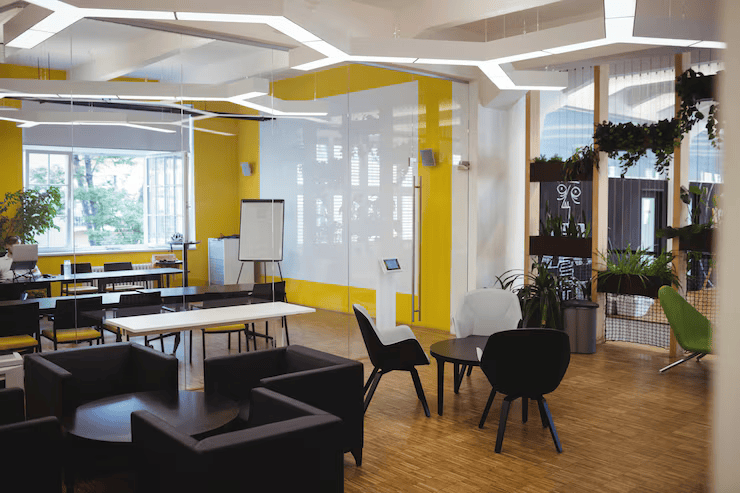
Motorised curtains can help manage daylight and glare while providing convenient operation for meeting rooms and larger workspaces.
Hotels can use motorised curtains to provide guests with a more convenient and modern room experience.
Motorised curtain systems are also suitable for conference rooms, restaurants, showrooms, entertainment spaces, and other areas where large or frequently operated curtains are installed.
Not every curtain motor is suitable for every curtain installation. Before choosing a system, consider the following factors:
The motor should have sufficient capacity for the curtain it needs to move. Curtain weight and track configuration are important considerations when selecting a suitable motor.
The size and design of the curtain track can influence motor selection. Long tracks may require a system specifically designed for the installation.
Depending on the product, curtain motors may use wired electrical power or other power configurations. Choose according to the installation environment and available infrastructure.
For bedrooms, meeting rooms, theatres, and other quiet environments, smooth and quiet operation can be an important consideration.
Decide whether you need remote control, wall-switch operation, smartphone control, voice control, scheduling, or integration with an existing smart-home system.
If manual operation during certain situations is important, check whether the selected system supports the appropriate manual-control or override functionality.

A curtain motor provides powered movement for curtains, allowing them to open and close without manually pulling the fabric.
Yes, provided the motor and track are correctly specified for the curtain’s weight and configuration. Always check the manufacturer’s load specifications.
Many motorised curtain systems support remote controls. Some models can also support app, wall-switch, voice, or smart-home control depending on their features.
Yes. Compatible systems may allow curtains to operate according to schedules or smart-home routines.
No. Motorised curtains can be used in apartments, houses, offices, hotels, and commercial spaces. Their suitability depends on the window, curtain, track, motor, and desired level of automation.
The purpose of a curtain motor goes beyond simply opening and closing curtains. It provides powered, convenient, and potentially automated control over window coverings while making large, heavy, or hard-to-reach curtains easier to operate.
With options such as remote control, smart-home integration, scheduling, and electronic operation, motorised curtains can provide a practical upgrade for modern residential and commercial spaces. The key is to choose a motor that matches the curtain weight, track design, power requirements, operating environment, and desired control features.
For customers considering curtain automation, understanding these factors can help ensure a smoother, more reliable, and convenient motorised curtain experience.